Born to Dilly Dally, Forced to Lock In: The End-of-Year Reality

It’s funny because it’s painfully accurate. We’d all prefer to dilly dally (what a perfect phrase for doing nothing in particular while enjoying it immensely). But December exists. Deadlines exist. That project you’ve been putting off since September definitely exists.
“Locking in” became the defining phrase of late 2025. Not because we collectively discovered some revolutionary productivity technique, but because we finally had language for that mental shift from “eh, I’ll do it later” to “okay, no really, I have to do this now.”
What “Lock In” Actually Means

To lock in means achieving a state of genuine focus. Not the fake focus where you’re technically working but actually checking your phone every three minutes. Real focus. The kind where you look up and realize two hours passed.
The term originated in gaming (where else?). Players would say they’re “locking in” before an important match, signaling a shift from casual play to serious concentration. By 2023, it escaped gaming culture and became shorthand for getting serious about anything.
Then came the Face ID memes. Apple’s facial recognition struggles to unlock your phone when you’re smiling, crying, or making literally any expression other than neutral. So people started joking about needing to “lock in” (get serious, stop crying) just to unlock their phones. The phrase took off from there.
By August 2025, TikTok transformed it into “The Great Lock In”: a collective movement encouraging people to spend September through December focused on personal improvement instead of waiting for New Year’s resolutions. The American Dialect Society voted “lock in” the most useful term of 2024.
But here’s what’s interesting about the meme’s staying power. It’s not just about productivity theater or hustle culture nonsense. It captures something real about the end-of-year psychological shift.
The December Reality Check
December does something strange. Suddenly the year that felt infinite becomes finite. That vague “I’ll do it eventually” transforms into “if not now, literally when?”
You’ve been meaning to reorganize that project. Get clarity on next year’s direction. Finally finish that thing you started in March. Clean up your systems. Have those conversations. Make those decisions.
Not because you’re falling for productivity content telling you to “finish strong” (though there’s plenty of that). But because time actually is running out on this arbitrary cycle we call a calendar year, and our brains respond to that deadline whether we want them to or not.
This is where most productivity advice fails. It treats the desire to lock in as something you can manufacture through willpower or the right framework. But the urge to focus intensely in December isn’t manufactured. It’s just what happens when your brain realizes “later” is becoming “never.”
The Problem With Traditional Year-End Planning
Most end-of-year planning follows a predictable pattern:
- Review everything you didn’t accomplish
- Feel bad about it
- Make ambitious plans for next year
- Organize them into neat categories
- Abandon most of it by February
This approach treats December like a clean slate preview. Forget what didn’t work this year; next year will be different. New goals, new energy, new you.
Except it won’t be. You’re the same person with the same constraints, tendencies, and habits. That’s not pessimism; it’s just reality. The fresh-start fantasy rarely survives contact with actual daily life.
The “lock in” mentality offers something different. It’s not about planning the perfect future. It’s about focusing on what actually matters right now, in these specific weeks you actually have.
What Actually Helps You Lock In
Here’s what doesn’t work: deciding to lock in and then… continuing exactly what you were doing but feeling guilty about it.
What does work: changing your environment to support focus instead of fighting your environment with willpower.
Get specific about what “locked in” means for you. Are you finishing something? Starting something? Organizing something? Making decisions about something? The specificity matters. “I’m going to lock in” means nothing. “I’m going to finish the client proposal, make decisions about next quarter’s priorities, and organize project documentation” means something.
Make the work visible. This is where tools actually help. Not because they magically create motivation, but because they make the gap between intention and reality impossible to ignore. When you can see what you said you’d do and what you actually did, you can’t hide from the disconnect.
Connect the daily grind to the bigger picture. The reason you can’t focus isn’t usually because you lack willpower. It’s because you don’t see how today’s task connects to anything that matters. When that connection is clear, focus becomes easier. Not easy, but easier.
Set up your December workspace for focus, not aspiration. This means: close what you’re not working on. Put away projects that aren’t active. Remove the digital clutter. Make it so your workspace only shows you what’s actually relevant right now. Most people’s planning systems show them everything all the time, creating constant low-level anxiety about all the things they’re not doing.
How Timestripe Helps You Actually Lock In
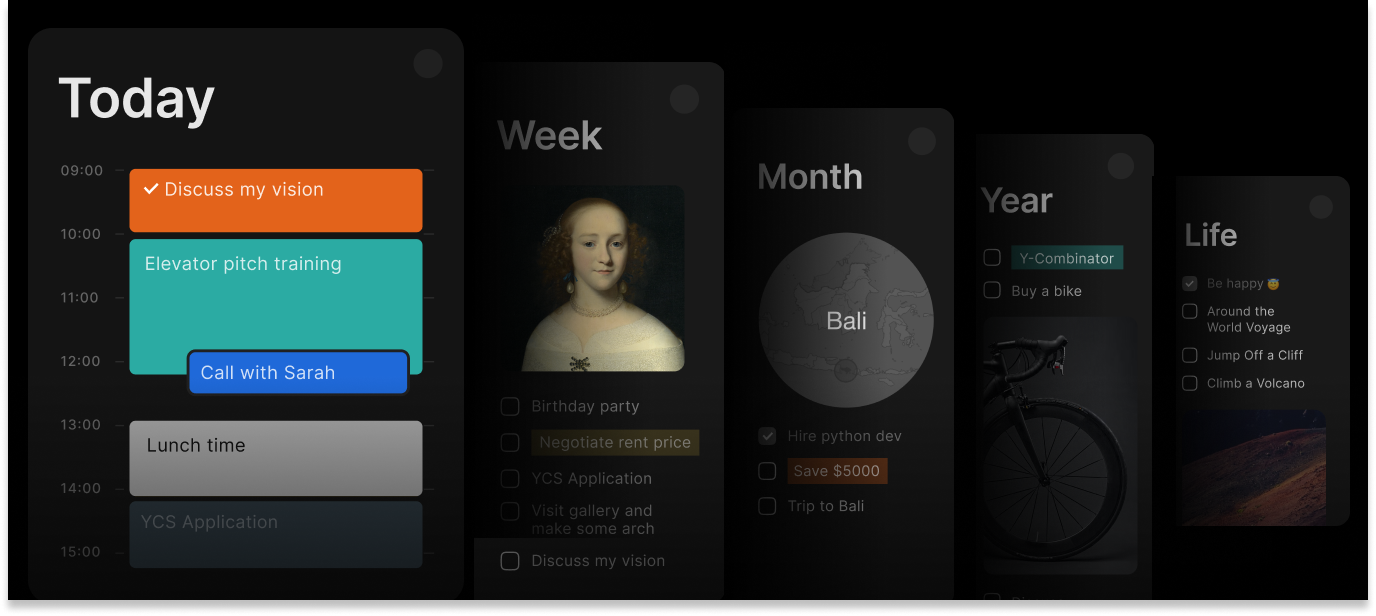
Horizons let you see both the daily and the directional. You’re not just looking at today’s tasks (which can feel overwhelming) or just big-picture goals (which can feel meaningless). You see how they connect. Today’s work exists in the context of this week, this month, this year. That context is what makes daily work feel purposeful instead of arbitrary.
Boards keep everything in one place without becoming chaos. Your December probably involves multiple projects, each with its own information, deadlines, and details. Boards let you organize these without spreading them across different tools, browser tabs, and note apps. Everything you need to lock in on is in one workspace.
Calendar view shows you the actual timeline. Not the idealized timeline where you have infinite time and energy. The real timeline where December has limited weeks, each week has limited days, and you need to make actual decisions about what fits and what doesn’t.
Progress Centre makes completed work visible. When you’re locked in, you need to see that you’re actually making progress. Not for gamification or motivation, but because the brain needs evidence that focus is producing results. Otherwise, you give up.
You can adjust without rebuilding everything. December plans change. Always. The tool needs to accommodate that without forcing you to reorganize your entire system. Move things, adjust timelines, shift priorities—without friction that makes you give up entirely.
December Isn’t Magic
One more thing about the Great Lock In of 2025 and all its variations: December isn’t special. It’s just time. The same time you had in July, when you were definitely going to start that thing.
The only difference is urgency. The calendar year ends, creating an artificial but psychologically real deadline. That deadline makes people focus. Not because December air has special properties, but because deadlines work.
If you’re feeling the urge to lock in right now, that’s just your brain responding to the deadline. Use it. Not because you need to finish strong or start fresh or any of that. But because you have specific things you want to accomplish, and limited time to accomplish them, and that combination tends to produce focus.
The tool helps you translate that focus into action. The meme captures the feeling. The end of year provides the urgency.
The actual work? That’s still up to you.
But at least now you have language for that moment when you switch from dilly dallying to actually doing the thing. And you have a workspace that makes doing the thing slightly less painful than it otherwise would be.
You were born to dilly dally. We all were. But sometimes you gotta lock in.
Read next