
The Wellness of Mini-Sabbaticals: A New Way to Prevent Burnout

The lines between our work and our personal lives are thinner than ever. For many of us, especially those working remotely or across different time zones, this often leads to a state of chronic stress. While we often look at a single annual vacation as the ultimate cure for exhaustion, these rare breaks usually act as a temporary fix. A more sustainable way to live involves the practice of mini-sabbaticals and intentional recovery cycles.
This approach lets us view rest as something that grows with us. We can stay productive and keep our minds sharp by mixing significant time for restoration with daily habits that help us decompress.
From Mini-Sabbaticals to Daily Rhythms
A mini-sabbatical is a concept that moves us away from the traditional idea of a distant retirement. Instead of waiting decades for a break, we can take recurring periods of time off throughout our working lives. This philosophy is closely related to the idea of micro-retirement. Check out our article on why it is never too early to retire.
When we accept that rest is a natural part of our professional journey, we create a stronger foundation for our mental health. To make this work, we can categorize our rest into different levels:
- Daily Recovery: Short windows of time to step away from the screen and reset the nervous system.
- Weekly Deep Rest: Dedicated blocks, like a weekend or a mid-week afternoon, for hobbies and nature.
- Quarterly Sprints: A few days every three months dedicated to personal growth and learning.
- Mini-Sabbaticals: Extended breaks of several weeks or months taken every few years to fully recharge.
The Practical Path of Mini-Sabbaticals: How to Step Away Without Losing Control
Many professionals feel that they cannot simply disappear for two weeks without causing a crisis. However, a successful mini-sabbatical is not about a sudden disappearance, but about a well-managed transition. Modern HR leaders increasingly view these breaks as a tool for “retention over replacement.” As many talent experts point out, it is much more cost-effective for a company to support a burnt-out employee through a short sabbatical than to recruit and train a new one.
To make this work physically and practically, focus on building a “continuity bridge” before you leave:
- Audit your dependencies: Identify which tasks only you can perform and document the steps for others.
- The "Shadow" Period: Assign a temporary lead for your projects a week before you leave, so you can oversee their handling of tasks while you are still there to help.
- Negotiate the Scope: If a full disconnect feels impossible, propose a “phased sabbatical” where you are completely offline for the first week and only available for one hour of high-level consulting during the second.
By presenting your break as a way to return with more energy and better ideas, you turn a potential conflict into a strategic advantage for both yourself and your organization.
Comparing Traditional Breaks and Scalable Rest
Deep Work and the Need for Recovery
Deep work takes a lot of mental energy. Trying to stay focused without any pauses eventually leads to tired thinking and lower quality results. We can stay sharp by scheduling dedicated blocks for our hardest tasks and following them with specific recovery time.
Setting aside time for deep concentration helps us move forward on our most important projects. However, the quality of that work depends on how well we rest afterward. This might mean a walk outside, a few minutes of mindfulness, or a simple break from our screens. By using tools like Timestripe, we can protect these recovery moments from meetings and notifications.
Quarterly Sprints for Personal Growth
Sometimes the best way to rest is not to do nothing, but to change what we are focusing on. Personal development sprints are a great way to spend a few days each quarter learning a new skill. These sprints give us the psychological distance we need to return to work with more inspiration.
How to plan a personal growth sprint:
- Pick a theme: Choose a skill or hobby that is completely unrelated to your daily job.
- Set a goal: Decide on a small, achievable outcome, like finishing a book or a short course.
- Clear the schedule: Treat this time with the same respect as a major work deadline.
- Reflect: Use the final hours to think about how this new perspective helps your main career.
Using the Right Tools for Balance
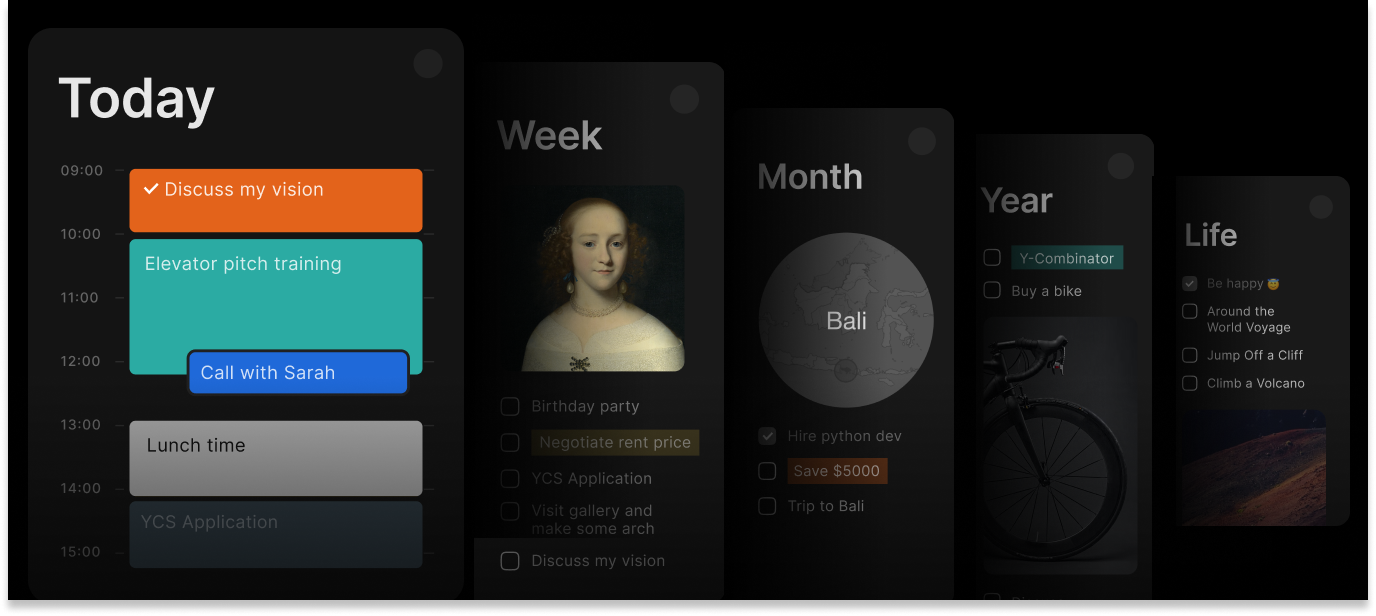
Managing different types of rest requires a system that can handle everything from a quick afternoon break to a month-long sabbatical. Timestripe provides the structure] to make sure your wellness goals stay just as organized as your work projects. Being able to see your plans across weeks, months, and years helps you fit recovery into your schedule without feeling like you are losing your momentum.
Taking care of your mental and physical state is the most important part of a long and successful career. By using a system of scalable rest, we can move away from the cycle of burnout and toward a more intentional way of working where our health and our goals support each other.
Read next



Ready to take control of your schedule?
Learn how to integrate mini-sabbaticals into your career for lasting wellness. Discover simple tactics to truly disconnect, recharge your mind, and protect your energy.
Get Started