
Hacking Discipline: How I Found My Rhythm
I recently had a conversation with a close friend of mine who is a neuroscientist. As usual, we discussed deep topics such as work, life goals, and how to stay motivated without losing our minds. We both feel that the world is full of opportunities, and that we want to do everything at once. With this mindset, it’s easy to become overwhelmed by our goals and emotions. I asked her how we can approach our goals with respect for our limitations, while still having enough energy for the things we want to do.
She said one thing that connected the dots for me, 'I think I’ve got it. The key is finding your rhythm.'
The Difference Between Flow and Rhythm
People often talk about the 'flow state', but it can be difficult to explain it to others or achieve at will. Rhythm, however, is different because it is more tangible and you can build it by yourself. You can change the frequency of returning to certain questions, make your move toward change more or less intense.
I also realised that the last several months had gone well for me in terms of work and self-regulation because I had already approached my tasks in this way and found my rhythm. And also it actually made everything more fun for me.
From Pressure to Values
When people speak about discipline, they feel that pressure of “I must do this task cause I need to be disciplined”. How can you find something enjoyable after these words? I don’t think you can. Of course, not everything is about being enjoyable, but if you remember why you took on this task in the first place, you’ll probably recall some of your needs or values, and it will fit into your priorities much more easily.
Then think about the important things you want in your life. Money? You need to spend some time working on your budget. Do you want to feel great? Let’s get you moving. It sounds basic, but the most important thing is to find something you enjoy. If fitness doesn’t feel right for you at the moment, try simple dancing at home with your favourite music instead.
The goal is to add things to your routine, even if it’s just for a short time. The idea is to make a place for them in your week. Once you’re used to it, you can change the exercises and increase the duration to make things more challenging. Because by then, it will be part of your life and rhythm.
Applying the Method In Real Life
Let’s elaborate: the topic of money could be really complicated. Of course, things probably wouldn’t change after just one attempt. This idea could prevent you from trying to change your relationship with money. Let’s think of these relationships as a rhythm. The goal isn’t to improve by creating an extremely complicated Excel budget spreadsheet. It’s a rhythm, and you have time. Let’s take small but regular steps to find time in your life to understand the topic of money and how you approach it. The steps could be (and they were for me):
- write down in one place what I remembere about who owes whom
- check and cancel any unnecessary subscriptions
- read an article about economics and how money works
- start asking friends about their financial insights and what they spend the most on
- the big one: plan your budget for the next three months
The 85% Rule
And so on, but it shouldn’t all happen at once. You have time, and you can certainly find the right rhythm. Remember that, to avoid our brains viewing new tasks as a threat, they should be easy and achievable with only 10–30% novelty. Take the same approach with your hobbies, sports, etc.
Protecting Your Rhythm with Time Blocking
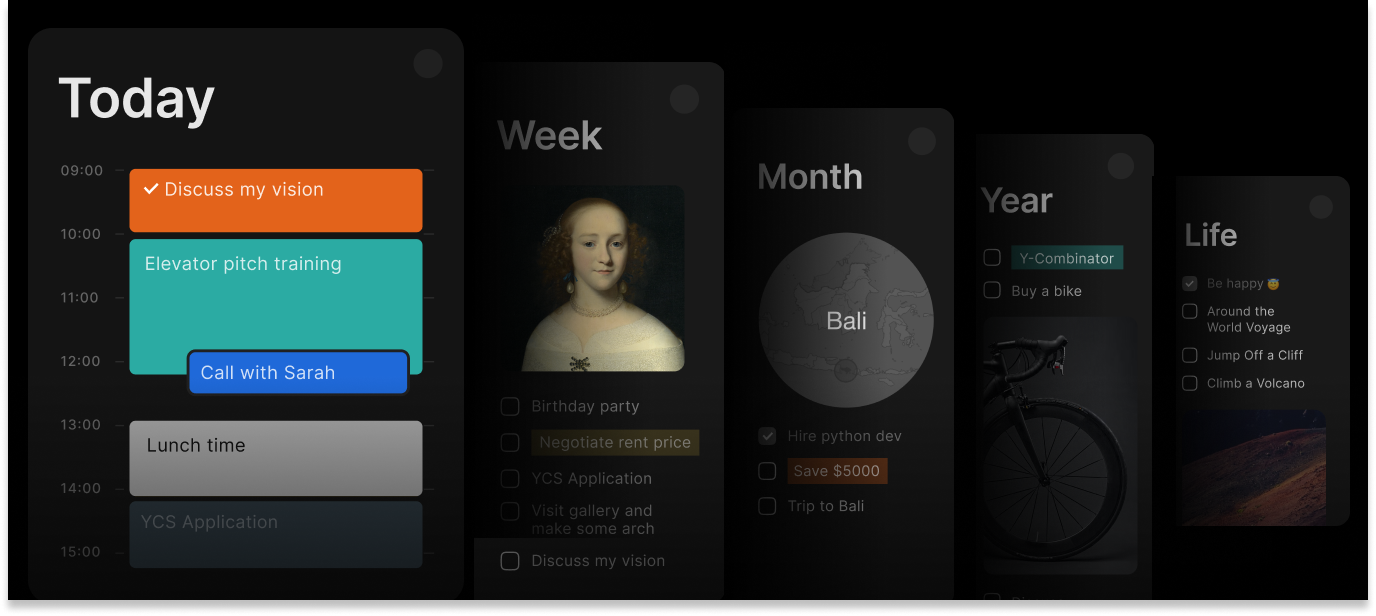
I find that the most useful time management method that aligns with this idea of rhythm is time blocking. With this method, you allocate time slots in your day, week, or month for specific activities. These blocks don’t have to be for one exact activity, but the theme of the block allocates this time for you with its own rhythm.
As a self-employed artist, I often find it difficult to manage projects with different themes and methods. So I finally decided to set aside time for them, rather than just doing them in my spare time after my actual job. Since then, I have felt more joy and control over my own comfortable rhythm. I hope you’ll find yours too. You can share your self-descipline stories with me here.
Read next




Find your rhythm
Start building the life you want today with flexible anchors in Timestripe
Get Started